


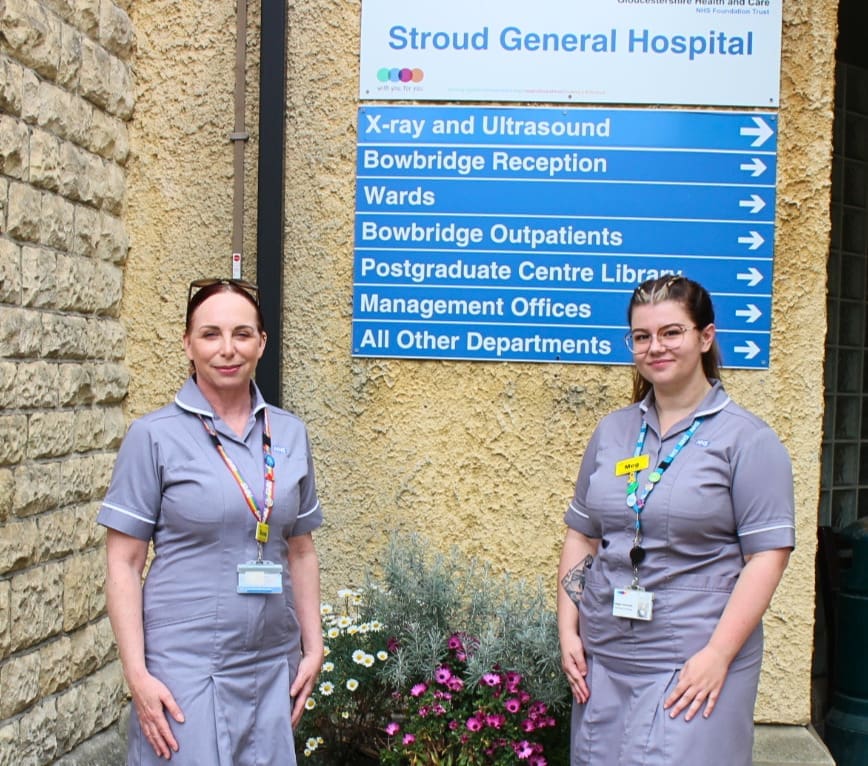
 Earlier this year, the Trust held its annual GHC Awards, receiving a record-breaking 247 nominations. The exceptional number of entries made the judging process more challenging than ever, with colleagues and teams across the organisation recognised for their dedication, innovation and commitment to patient care.
The awards ceremony, held at Hatherley Manor Hotel in April, celebrated award winners, shortlisted nominees and those receiving Special Recognition. Hosted by Trust Chair Graham Russell and Chief Executive Douglas Blair, the event provided an opportunity to acknowledge the outstanding contributions made by colleagues across GHC.
While not every nomination progressed to the finals, each submission reflected the remarkable work taking place throughout the Trust. One team recognised by a colleague was the Discharge Coordinator team, who were nominated for the Team of the Year Award.
The Discharge Coordination team received praised for their commitment to supporting patients, families and colleagues throughout the discharge process.
In their nomination a colleague wrote:
“The team work so hard on their allocated wards to provide good communication with patients and families and the MDT. They work professionally with our external partners, are engaged in collaborative working and are always seeking to improve processes related to patient flow and optimising length of stay.
“They work with and promote the Carers Hub, personalised care, and are veteran aware. They are respectful and kind and a real asset to their wards and the Trust.
“Being such a niche team, many people are still not aware of the role in the wider Trust. It is important for the team to feel valued and recognised to increase awareness of the role.”
With such glowing feedback, we wanted to find out more about the people behind the nomination and gain a better understanding of the vital role Discharge Coordinators play in supporting patients’ journeys through our community hospitals.
To learn more, we spoke with Donna Hawker from Stroud General and Meg Alexander from Forest of Dean Community Hospital about their role, the challenges they face and the difference they make every day.
To read more, click on the ‘+’ signs in the accordion below.
Donna Hawker, Discharge Coordinator, Jubilee Ward, Stroud General Hospital

On Jubilee Ward at Stroud General Hospital, ensuring patients leave hospital safely and with the right support is a vital part of care.
At the centre of this work is Donna Hawker, Discharge Coordinator, whose role is all about bringing people, plans and services together to make each patient’s journey as smooth as possible.
Donna coordinates all discharges on Jubilee Ward, working closely with a wide range of people. This includes doctors, nurses, the Ward Manager, therapy teams, patients and their families. Her focus is to make sure every aspect of a patient’s discharge is carefully planned and aligned.
A key part of Donna’s approach is early engagement. She makes a point of meeting every patient when they arrive on the ward. This allows her to start conversations straight away about their discharge plan – working with patients and families to understand their needs and expectations from the outset.
Donna liaises daily with the clinical team overseeing each patient’s care. By staying closely involved in patient assessments and progress, she helps shape a clear, medically informed plan for discharge. The aim is always to move patients forward as quickly and safely as possible, without compromising the quality of their care.
On Jubilee Ward, the team generally works towards a three-week discharge timeframe. Achieving this requires careful coordination, clear communication, and a shared commitment across the team.
Donna’s role highlights just how important teamwork is in healthcare. From coordinating with therapists to supporting families through decision-making, she plays a vital role in ensuring patients experience a smooth transition from hospital to home or onward care.
Her work not only supports patient wellbeing but also helps the ward run efficiently – making sure beds are available for those who need them while patients receive the right care, in the right place, at the right time.
How did you become a Discharge Coordinator?
“I’ve been working at Stroud General Hospital for 11 years,” Donna explains. “I started as a Healthcare Assistant on Cashes Green Ward. When a role as a Rehabilitation Assistant became available, I applied and was successful.”
Building on her experience, Donna continued to grow within the hospital. “When Emma Wright moved on from her role as Discharge Coordinator, I applied for the position.”
Donna believes her skills and personality helped her step into the role. “I love working with patients, I’m very organised, and I tend to stay calm under pressure. Those qualities are really important, as the role can be challenging. The ward can be very busy, and I often support patients and families who are stressed.”
What do you like most about your role?
“I really enjoy working on Jubilee Ward – it’s a lovely team, and Stroud is such a friendly community hospital,” Donna says. “I like meeting people and having conversations with them. It’s a very social role.”
What brings the greatest reward, though, is seeing the difference the team makes. “I get a huge sense of satisfaction from watching elderly patients who arrive on the ward needing a lot of support and then seeing them leave for home happy and more independent.”
She adds, “That’s when I know I’ve done my job – and that makes me very happy.”
Meg Alexander, Discharge Coordinator, Woodland View Ward, Forest of Dean Community Hospital
 At the Forest of Dean Community Hospital, Discharge Coordinator Meg Alexander plays a key role in ensuring patients leave Woodland Ward safely and with the right support in place.
In her role she oversees all discharges on the ward, working closely with a wide range of people including doctors, nurses, ward managers, therapy teams, patients and their families. Her focus is on bringing every part of the process together so that each discharge is carefully planned and runs as smoothly as possible.
Meg works daily with the clinical team to stay up to date on each patient’s progress. By being involved in assessments and care planning, she helps develop clear, medically informed discharge plans.
The goal is always to support patients to move on from hospital as quickly and safely as possible, without compromising their care.
“A large part of my role is working with patients, their families, clinical teams, system partners and even housing teams – the list keeps growing,” Meg explains. “There are lots of phone calls and emails, and plenty of coordination behind the scenes.”
Her role highlights the importance of teamwork in healthcare. From coordinating with therapists to supporting families through decisions, Meg helps ensure patients experience a smooth transition from hospital to home or onward care.
This work not only improves patient experience and wellbeing but also helps the ward run efficiently – ensuring beds are available for those who need them, while patients receive the right care, in the right place, at the right time.
How did you become a Discharge Coordinator?
“I began my NHS career at 17 as a Healthcare Assistant,” she explains. “I then spent seven years working in operating theatres at Gloucestershire Royal and Cheltenham General Hospitals.”
Keen to develop her skills, she went on to complete an Associate Practitioner apprenticeship, graduating in 2020. “After that, I worked as a scrub practitioner for two years,” she adds.
Following the COVID-19 pandemic, she made the move to Gloucestershire Health and Care. “I live in Cinderford, and when the Discharge Coordinator role came up, I applied for it.”
One of the added benefits of the role is its location. “I can walk to work, which is absolutely great.”
What do you like most about your role?
“I really enjoy being able to give patients what they see as good news,” she says. “Most patients want to go home, so being able to give them a discharge date is always really positive.”
She adds, “It’s incredibly satisfying to achieve those goals and see the difference it makes. Knowing I’ve helped someone reach that point feels like a real achievement.”
She also values the personal impact of the job. “It’s very rewarding to know you’ve helped someone leave hospital safely and with the right support in place. Being part of that process, especially at what can be a stressful time for patients and their families, means a lot.”
Another highlight is the local connection. “Working close to home and being part of the community makes a big difference. It feels good to support people in the area where I live.
“Overall, it’s the mix of teamwork, problem-solving and patient interaction that makes the role so fulfilling.”